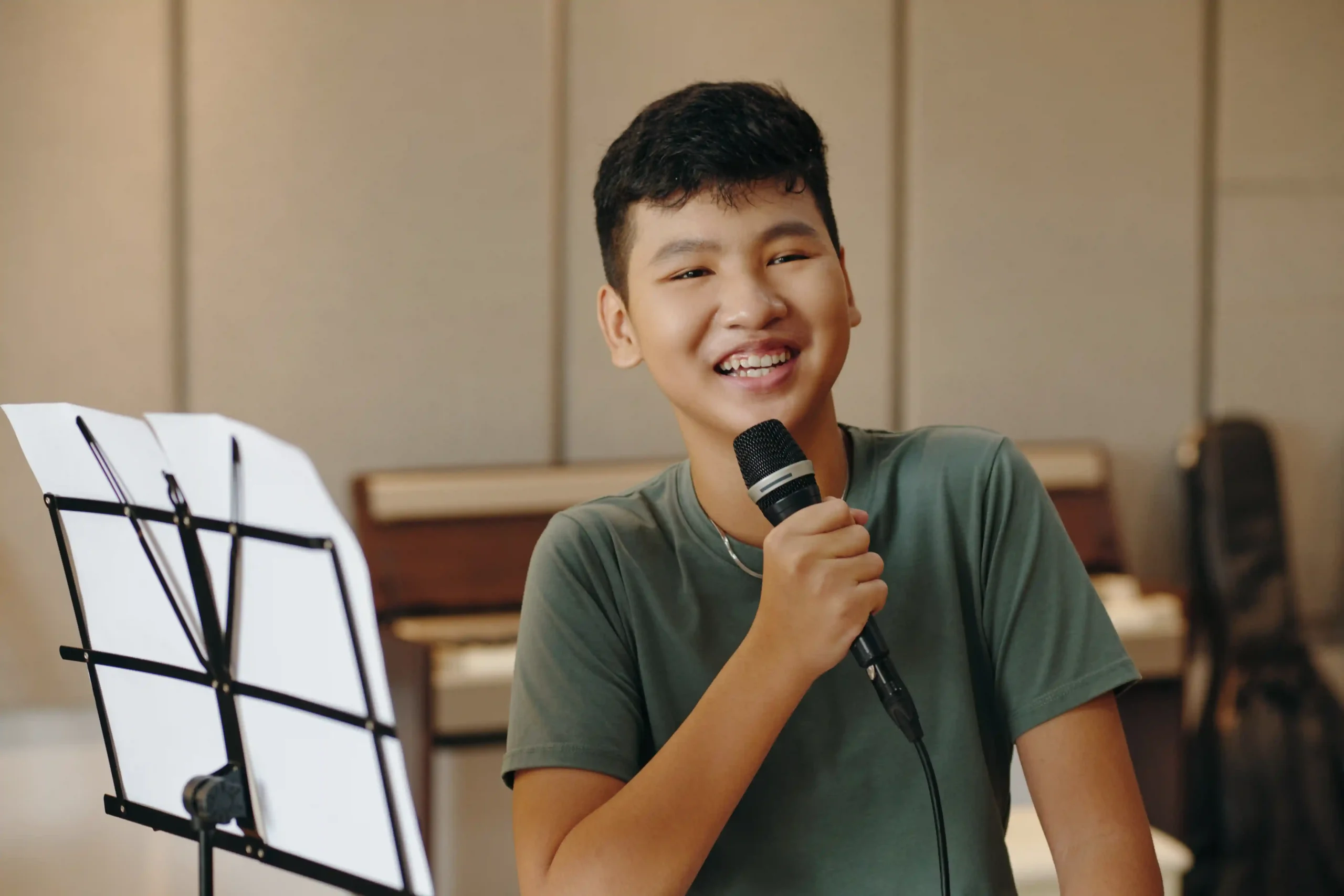

Some people avoid singing lessons because they fear being judged, have experienced negative criticism in the past, or believe that good singing is an innate talent rather than a skill that can be developed. Some also worry that vocal training will change their natural sound or make their voice seem overly “trained”. These concerns are understandable, but proper vocal training is designed to develop a singer’s technique and confidence while preserving the qualities that make their voice unique.
With this in mind, singing lessons in Singapore that are built on solid technique are not about replacing your natural voice with a generic sound. Good vocal coaching works with the voice you already have, including your tone, range and individual qualities, while addressing habits that may be limiting it. At Groove Music School, lessons begin with an assessment of your current vocal abilities, followed by structured guidance in breath control, tone production, pitch accuracy and vocal registers. The aim is to strengthen your technique while preserving your natural vocal quality.
This is particularly important for adults who value their natural vocal quality and want to develop it without losing what makes their voice distinctive, as well as for anyone who has previously been told that they cannot sing. Each course consists of four lessons, with the coach adapting the plan to the learner’s progress rather than following a fixed programme from the outset.
Why Do Some People Hesitate to Take Singing Lessons?
Many people avoid singing lessons because they feel self-conscious about their voice or fear being judged by others. Past criticism can also affect their confidence, particularly if they have been told that they cannot sing. Others believe that singing is an innate talent and that lessons will not help if they are not already naturally gifted.
These concerns are understandable, but they do not determine a person’s ability to improve.
| Common Concern | What Singing Lessons Can Provide |
| “People might judge my voice” | A supportive environment where you can practise and improve without pressure |
| “I’ve been told that I cannot sing” | Professional guidance to identify specific areas that can be developed |
| “Good singers are born talented” | Structured training in skills such as breathing, pitch, tone and vocal control |
Singing is a skill that can be developed through proper instruction and consistent practice. At Groove Music School, instructors begin by assessing each student’s current abilities, challenges and goals. They then adapt the lessons to help the student strengthen their technique and build confidence at a comfortable pace.
Who is Suitable for Singing Lessons in Singapore?
Lessons here are open to tertiary students, young adults, working adults, parents and retirees, as well as younger learners just starting out. Some students want a music career. Others just want to enjoy singing more, or finally do something about a voice they have never had the confidence to use.
Adults make up a large share of students who start later in life, often after years of assuming it was too late. One peer-reviewed study on individual singing lessons taken later in life found that 67% of participants reported positive changes in their social relationships after starting, alongside improvements in breathing and mood. This finding lines up with what most adult students say anecdotally: singing lessons rarely stay just about singing.
For younger students, lessons often start with simpler goals, such as pitch matching and basic confidence, since the priority early on is comfort rather than technical demand. The technique catches up once that comfort is there.
If you would rather learn in a shared setting instead of one-to-one, our group vocal classes cover similar ground alongside other students.
What Actually Happens in a Singing Lesson?
Lessons focus on the why and the how behind each technique, not just repetition for its own sake. Instructors do not hand out exercises without explaining what they are for, since understanding a technique tends to make it stick far better than simply repeating it.
Sessions usually start by assessing what is actually happening with your voice, since most vocal issues have a specific, identifiable cause rather than a general lack of effort. From there, lessons build through breathing technique, tone quality, vocal registers, blending, and articulation. The structure stays consistent from student to student, but every session is shaped around your goals and where you currently are. Building good vocal technique takes consistency far more than it takes natural talent. You can learn more about our lesson on our singing lessons page.
Do I Need Any Experience to Start?
No prior musical experience is required. Lessons are built for complete beginners as much as for people picking up singing again after years away. You do not need to read music before you start, and nobody expects you to already understand vocal terminology on day one.
Reading and terminology get built in gradually as you learn songs, not treated as a locked door before you are allowed to sing anything.
Here is the part that is entirely on you, though. Lessons build the technique. Practising it between sessions is what makes it stick. That part is on you.
Who Will Teach You?
Vocal lessons are led by a team with real teaching and performance backgrounds, not just enthusiasm for music.
Cheryl Loon, our founder, holds a Higher Diploma in Contemporary Vocal Teaching from The Voice College in the UK, along with credentials in Voice Disorders from the Icahn School of Medicine in New York. She also works as a certified life coach, which shows up directly in how she helps students manage performance nerves and build confidence.
Rebeca brings 17 years of vocal training and real stage experience, including as a finalist on Romania’s Got Talent. Elsa holds a Bachelor’s Degree in Music with Honours from Goldsmiths University and works as a vocal coach, producer, and performer in her own right. Michelle, another instructor, brings over a decade of choral experience, including time spent as a section leader and student conductor.
You can read more about our teaching approach on our about us page, or see the full teaching team directly.
Ready to Book Your Singing Lesson?
A common hesitation before booking a first lesson is worrying about being judged, especially if singing in front of someone feels exposing. That is a fair concern, and it is one our instructors deal with directly rather than brushing aside. Cheryl Loon’s background as a certified life coach exists specifically for moments like this.
“Coach Rebeca is a good and patient teacher that explains vocal concepts in a clear and interesting manner,” says Jin Rui, one of our vocal students.
If you are still unsure whether lessons are right for you, a trial lesson answers that faster than reading about it will. Looking for something less ongoing instead, such as a one-off session for an event? Our vocal workshops might suit you better.
Book a trial singing lesson and find out what your voice can actually do.
Frequently Asked Questions
Will singing lessons change how my voice sounds? No, not the actual tone or colour of your voice. What changes is how you use it: breath support, pitch control, and resonance. Two singers with completely different natural voices can both use excellent technique and still sound nothing alike.
Do I need to know how to read music before I start? No. Reading music is not a prerequisite, and it gets introduced gradually as part of learning songs rather than being taught as a separate hurdle first.
Is it too late to start singing lessons as an adult? No. Research on adults starting singing lessons later in life found real benefits even among people with no prior training, not only those returning to an old hobby. Starting the habit matters more than starting young.
What if I get nervous singing in front of my teacher? That is more common than most people expect, and it is worth saying directly rather than glossing over. One of our instructors, Cheryl Loon, is a certified life coach as well as a vocal specialist, and performance anxiety is something she works through with students specifically, not just an assumed side effect of technique training.