Buying your first piano is an exciting decision, but for many Singapore families, it comes with real questions. How much space do you have? What is your budget? Do your neighbours share a wall with you? These are not small considerations, and the answer you land on will shape how comfortably you practise at home.
This guide gives you a clear, honest comparison between acoustic and digital pianos, so you can make a decision that actually fits your life.
At a Glance: Acoustic vs Digital Piano
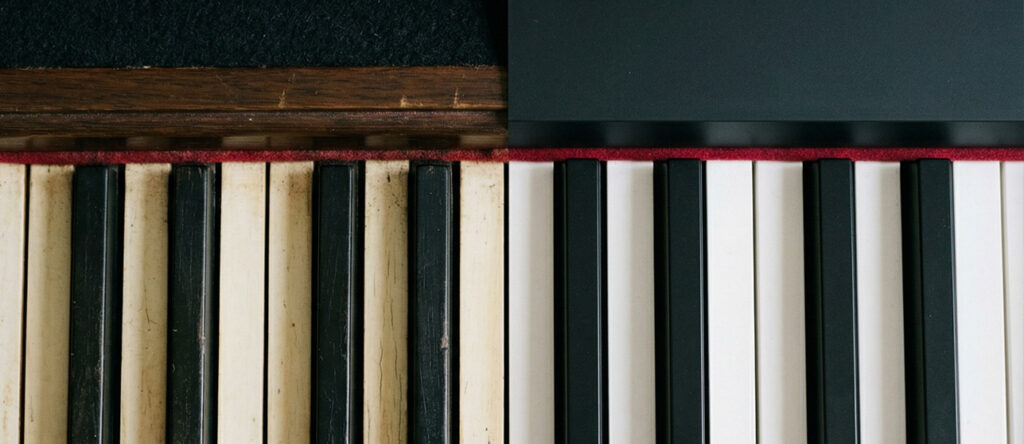
Before diving into the details, here is a simple side-by-side overview.
|
Acoustic Piano |
Digital Piano |
|
|---|---|---|
|
Starting price (Singapore) |
~$3,300 (new) |
~$600 |
|
Annual maintenance |
$190 to $250 |
Minimal |
|
Space needed |
Large, permanent footprint |
Compact, storable |
|
Noise level |
Loud (60 to 95 dB) |
Silent with headphones |
|
Humidity sensitivity |
High |
Low |
|
Resale value |
Strong |
Moderate to low |
|
Best suited for |
Classical, long-term players |
Beginners, HDB households |
Sound and Touch: What Beginners Actually Need to Know
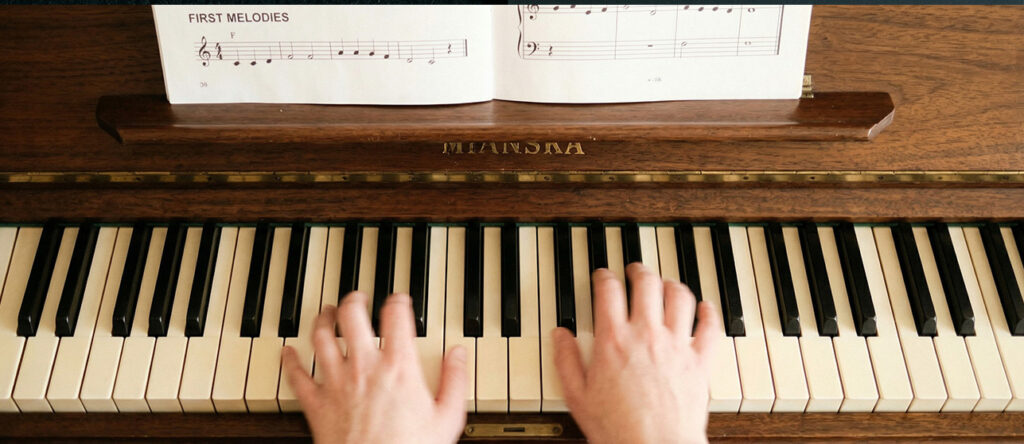
An acoustic piano produces sound mechanically. When you press a key, a felt hammer strikes steel strings, and the vibrations travel through a wooden soundboard. The result is a warm, natural tone that responds directly to how lightly or firmly you play. This responsiveness becomes increasingly important as you advance, particularly in classical music.
A digital piano recreates this using high-quality recordings of real concert grand pianos. At the beginner level, the difference is much smaller than most people expect. According to Piano Dreamers, many students practise on digital pianos at home and supplement with acoustic sessions at a music school, achieving strong results regardless. What matters far more than instrument type at this stage is consistent practice and proper guidance from a qualified teacher.
For those drawn to classical music, an acoustic piano's dynamic sensitivity becomes a real advantage over time. For pop, rock, or contemporary styles, a digital piano's versatility suits the music naturally and opens up features like recording, headphone practice, and app connectivity. If you are unsure which direction your learning will take, that is completely normal for a beginner, and exactly the kind of question a good teacher helps you work through.
Acoustic Pianos in Singapore: Costs and Considerations
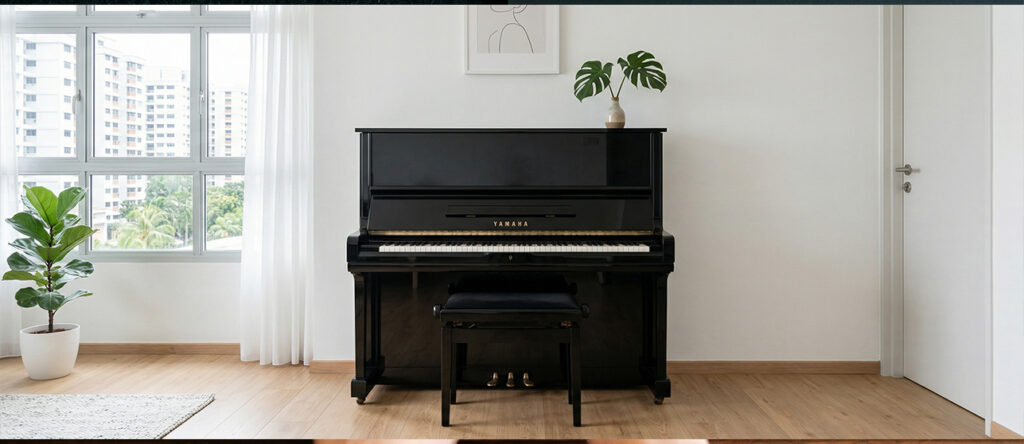
New upright pianos from Yamaha and Kawai start at around $3,300 and can exceed $15,000 depending on size, brand, and origin. The most popular mid-range choice among Singapore families remains the Yamaha U1, a Japan-made upright retailing between $8,800 and $10,600. For a more accessible entry point, the Cristofori CU-125N comes in at around $4,199, and reconditioned Japanese uprights are available from specialist dealers at $3,000 to $5,500, typically including delivery, tuning, and a short warranty.
Beyond the purchase price, acoustic pianos carry ongoing maintenance costs that are easy to underestimate, especially in Singapore’s tropical climate.
Singapore’s average humidity sits above 80%, which takes a real toll on acoustic instruments. Moisture causes wood to swell, glue joints to weaken, and metal strings to rust. As noted by Studies-Observations, a dehumidifier rod running inside the piano at all times is considered essential by most local piano technicians.
|
Tier |
Example Models |
Estimated Cost |
|---|---|---|
|
Tuning |
Twice a year (minimum) |
$70 to $90 per session |
|
General servicing |
Once a year |
$30 to $50 |
|
Dehumidifier rod |
One-time purchase |
$60 to $90 |
|
Annual total |
~$190 to $250 |
On the upside, well-maintained acoustic pianos from brands like Yamaha and Kawai retain 40 to 80% of their resale value over time. Several Singapore dealers, including Music Lodge and Aureus Instruments, offer buyback programmes at 50 to 60% of purchase price within two years, making them a reasonable long-term investment.
Digital Pianos in Singapore: What Your Budget Gets You
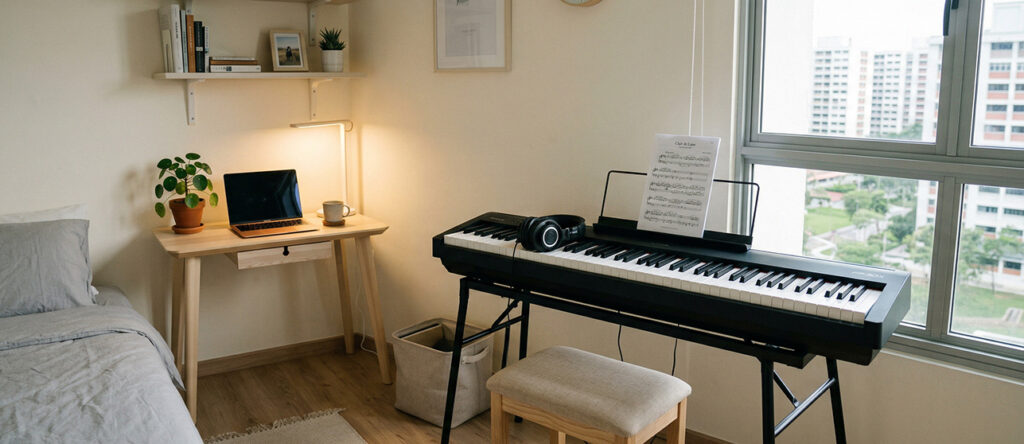
Digital pianos are far more accessible in price and carry almost no ongoing maintenance costs. No tuning, no humidity worries, and no annual servicing required.
|
Service |
Frequency |
Price Range |
|---|---|---|
|
Budget |
Korg B2, Casio CDP-S110, Roland FP-10 |
$590 to $850 |
|
Beginner sweet spot |
Yamaha P-225, Roland FP-30X, Casio PX-S1100 |
$1,000 to $1,800 |
|
Mid-range |
Yamaha Clavinova CLP-825, Kawai CA401 |
$2,000 to $5,000 |
Most retailers, including Swee Lee and Yamaha Music Singapore, bundle a bench, headphones, and dust cover with purchase. At the beginner sweet spot of $1,000 to $1,800, you get weighted hammer-action keys, quality grand piano sampling, and headphone connectivity, everything a beginner needs to develop good technique and enjoy the process.
The HDB Reality: Why Many Singapore Beginners Choose Digital
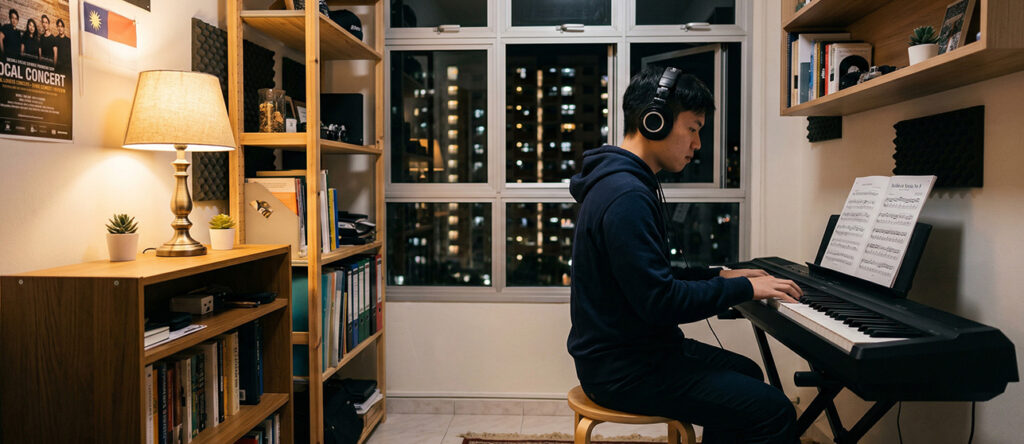
For the roughly 80% of Singaporeans living in HDB flats, two practical factors tip the scales strongly toward digital.
Noise is the bigger concern. Piano playing registers at 60 to 95 dB, which is loud in a shared environment. HDB guidelines advise against loud activities after 10:30 pm, and the Community Advisory Panel on Neighbourhood Noise has recommended extending quiet hours further. A digital piano with headphones eliminates this entirely, making late-night or early-morning practice completely feasible.
Space is the second factor. A standard upright piano measures around 150 cm wide by 60 cm deep and weighs 200 to 275 kg. It requires a permanent spot in the room. A portable digital piano like the Casio PX-S1100 is just 23.2 cm deep and 11.2 kg, and can be stored away on a folding stand when not in use.
For those who want an acoustic piano but are concerned about noise, Yamaha’s Silent series and Kawai’s AnyTime systems offer a middle ground. These systems stop the hammers before they strike the strings and route sound through headphones instead, adding roughly $2,000 to $4,000 to the cost.
Start with Lessons Before You Buy
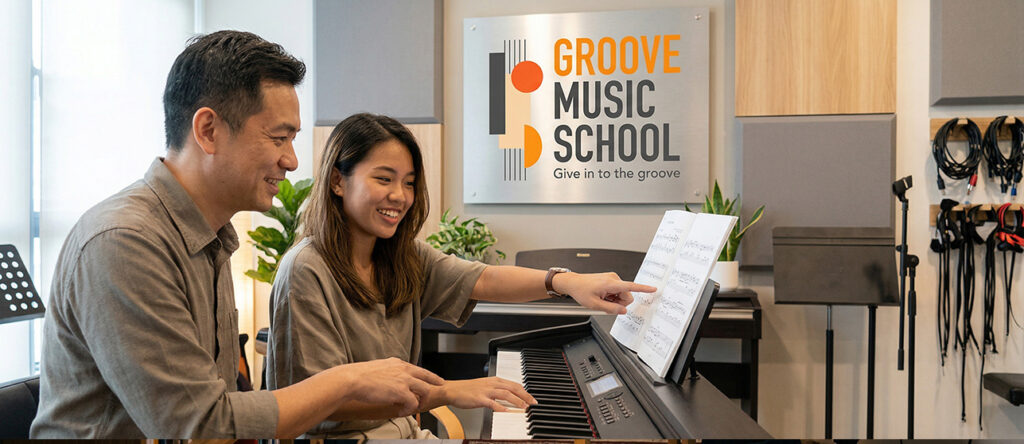
Here is the advice that most piano guides leave out: you do not need to own a piano before you start learning.
The most practical first step is to begin piano lessons. At Groove Music School, students practise on quality instruments from their very first session, experiencing both acoustic and digital pianos in a proper learning environment. A few weeks of lessons will tell you far more about your preferences than any amount of online research.
Groove’s instructors tailor every lesson to the individual student, whether a child starting from age 4, a teenager, or an adult returning to music after years away. Beyond technique, their teachers focus on building genuine confidence and a lasting enjoyment of music, with well-being woven into every stage of the learning process.
Once you and your teacher have a clearer picture of your needs, you will be in a much better position to invest in the right instrument. That clarity is worth more than making a $3,000 to $5,000 decision upfront.
Which Piano is Right for You?
|
Your Situation |
Recommended Choice |
|---|---|
|
Living in an HDB flat |
Digital piano |
|
Budget under $2,500 |
Digital piano |
|
Need silent or flexible practice hours |
Digital piano |
|
Pursuing classical music long-term |
Acoustic piano |
|
Budget of $3,000 and above |
Acoustic or reconditioned upright |
|
Unsure about long-term commitment |
Start with lessons first |
The right piano is the one that fits your space, your budget, and where you are in your musical journey. Both instruments are capable of taking a complete beginner to an impressive level — what makes the real difference is having the right guidance from the start.
Not sure where to begin? Book a trial lesson at Groove Music School and experience both instruments firsthand, guided by a qualified teacher who can help you decide with confidence. You can also visit our piano lessons page to find out more about what to expect.