
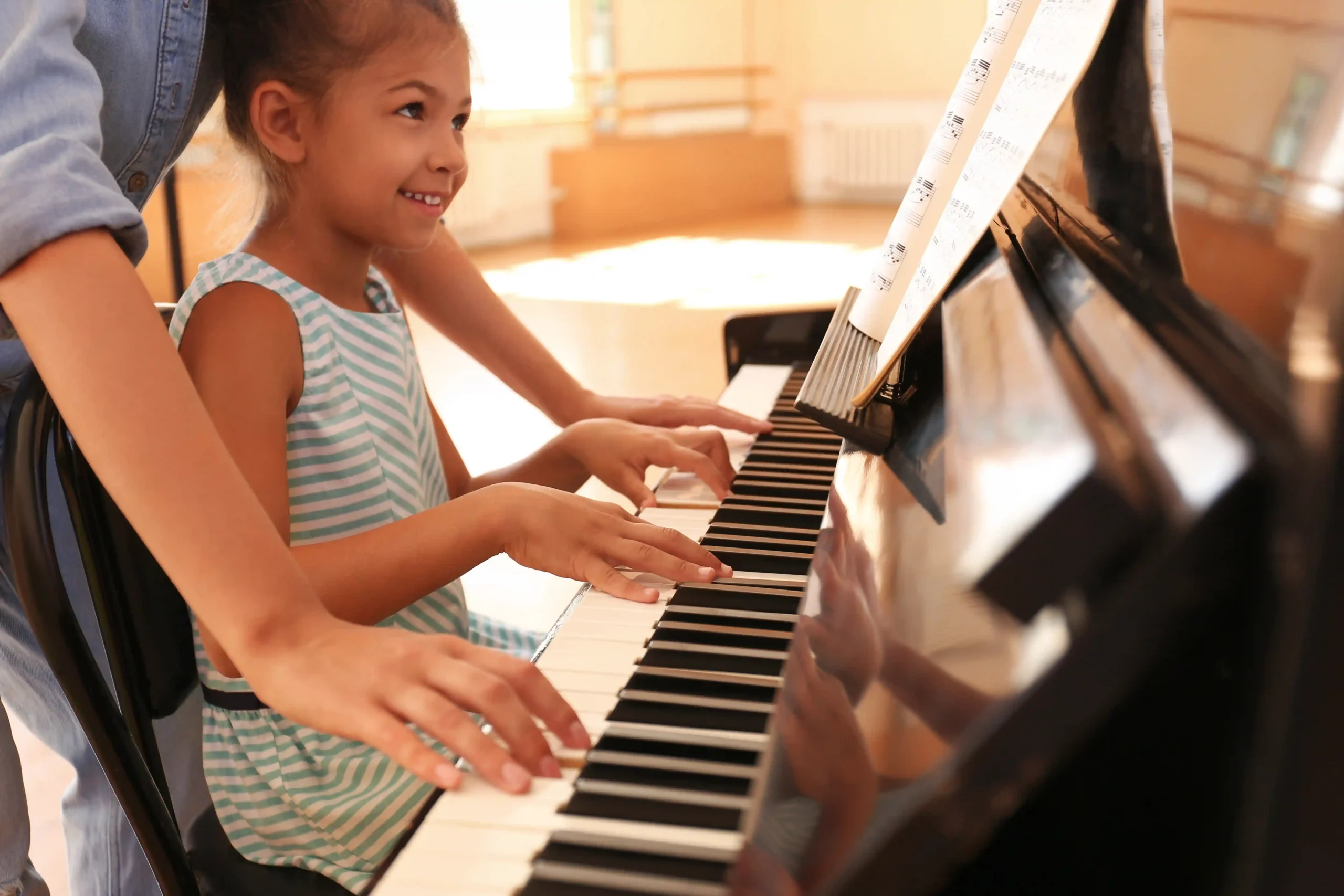

A parent messages us asking if five is too young to start. An adult calls asking if 50 is too old. We hear some version of both these questions, and the answer is the same either way. Piano lessons work at almost any age, and that’s the idea our lessons are built around. Whether you are picking up the instrument for the first time or returning to it after years away, lessons are one-on-one, taught at your own pace, and cover technique, theory, and playing songs you actually want to play. You do not need to read music first. You do not need any background at all.
That flexibility matters more than most people expect. A five-year-old and a fifty-year-old are not learning the same way, and a good piano teacher plans for that difference rather than teaching every student in the same way.
Who Can Start Piano Lessons in Singapore?
Our piano and keyboard lessons are open to students aged four and up. Students here range from age four right through to their seventies, so it is never too late to begin. Young children usually start with simple songs and basic key recognition. Older beginners, like teens and adults, tend to move faster through the fundamentals and can jump straight into music they already like.
Starting young does have one real advantage. Research published in the Journal of Neuroscience has found that music training that starts before the age of seven can have a stronger effect on brain development, particularly in areas linked to motor coordination. A four-year-old who starts today begins about ten years earlier than a teenager just picking up the instrument for the first time.
That said, starting later is not a disadvantage in the way people assume. Teenagers and adults often read faster, focus for longer, and already know what kind of music they want to play. That makes goal-setting easier from lesson one.
What Actually Happens in a Piano Lesson?
Lessons should not be built around drilling scales for their own sake. At Groove Music School, we focus on building a strong foundation in music theory while keeping actual playing as the main focus, so you are working towards songs, not just exercises.
You can learn more about what our piano lessons cover, including how the course is tailored to suit your goals and learning style.
Styles taught include pop, rock, and jazz, alongside the classical basics that give you a proper technical grounding. If you are working towards a graded qualification, it is worth knowing upfront that we do not currently run ABRSM (Associated Board of the Royal Schools of Music) exam preparation. We do, however, have experience preparing students for Trinity College London’s Rock & Pop. Also, many students who started out aiming for ABRSM end up preferring it since it leans on contemporary songs rather than classical set pieces. That said, exams are entirely optional. Plenty of students don’t take those exams and simply play for themselves.
Do I Need My Own Piano to Get Started?
Not on day one. But you will need something to practise on between lessons fairly quickly, and this is where a lot of beginners get stuck without realising it, since progress depends far more on daily practice than on the lesson itself.
| Option | Best for | What to know |
| Digital keyboard | Beginners, smaller homes | Choose one with weighted keys, otherwise your fingers won’t build the strength or feel needed for a real piano |
| Acoustic piano | Anyone planning to stick with it long term | Costs more and takes up space, but gives the most accurate feel and tone |
A good digital keyboard can be an effective choice for beginners, but if you are serious about progressing past the first couple of months, you will want weighted keys or an acoustic piano if you have the space and budget. It is not a strict rule, just a practical one to help develop proper finger strength and technique. For a closer look at weighing up the two options, read our acoustic vs digital piano guide.
Is It Too Late to Learn Piano as an Adult?
Learning to play piano as an adult is not too late. Musical training appears to offer real cognitive benefits at any starting age, not only when you begin as a child. A six-month piano programme for adults aged 60 to 85, led by researcher Jennifer Bugos at the University of South Florida, produced measurable gains in memory, verbal fluency, and processing speed compared with a control group that received no lessons.
Adults often assume they are starting from a weaker position than a child would. In practice, the opposite tends to be true. Adults already understand rhythm from years of listening to music, follow instructions without needing extra explanation, and can set their own goals instead of needing constant redirection. The main barrier is usually just making the decision to start. In our article, Can Adults Learn Piano? It’s Never Too Late to Start, this topic is discussed in greater detail.
Ready to Start?
You do not need to commit to a full course to find out if piano is right for you. Book a trial piano lesson and see how it feels before deciding on anything further.
Frequently Asked Questions
Do I need to know how to read music before I start?
No. Reading is built in gradually as you learn songs, rather than taught as a separate hurdle before you are allowed to play anything.
Will I need to sit ABRSM exams?
No, and it is not expected. We do have a proven track record of successfully preparing students for Trinity Rock & Pop exams instead, but plenty of students choose to skip exams altogether and play purely for enjoyment.
Can I try a lesson before signing up for a course?
Yes. A trial lesson is a chance to meet your teacher and get a feel for whether piano suits you, before you decide on a keyboard or piano of your own.
Where are lessons held, and what are the opening hours?
We run lessons from our Novena location and our Orchard-area location on Kramat Lane, both open Monday to Friday from 12pm-8pm, and Saturday and Sunday from 11am-8pm.


