
One of the first things that bass lessons Singapore students look for to practice is playing in tune with music. At Groove Music School, we show you that the bass is not just a low hum in the background of every band, but an integral part. Lessons offered on bass guitar with an emphasis on rhythm, groove, timing, and even musical confidence.
Whether new to the bass, returning after a hiatus, or looking to tighten their ship for band playing, we welcome music students at all stages. You are interested in taking bass guitar, you love songs from pop and rock, praise and worship, electric bass performance or on your own. A good bass lesson should help one discover the instrument as a clear, physical, and musical sensation in its own right.
Why Playing Bass Matters in a Band
The bass player secures the music with rhythm, harmony, and feel. The same solid bass line allows for the drummer, guitarist, keyboardist, and singer to lean against something stable. Which is why bass composition and learning to play it come down as much to listening as well.
Bass guitars may appear simpler than electric guitars, but their function requires a level of control and awareness. The notes are expressed in the choice of movement and chord, while the timing is effective worldwide. A careful bass player can create fullness and color within a simple song.
Bass guitar lessons in Singapore offer a clearer path into ensemble playing for many. You learn to play to the drummer, provide harmonic support to the melody and how not to overplay. These habits assist one in being a member of a band with more self-assurance.
What You Learn in Beginner Bass Lessons
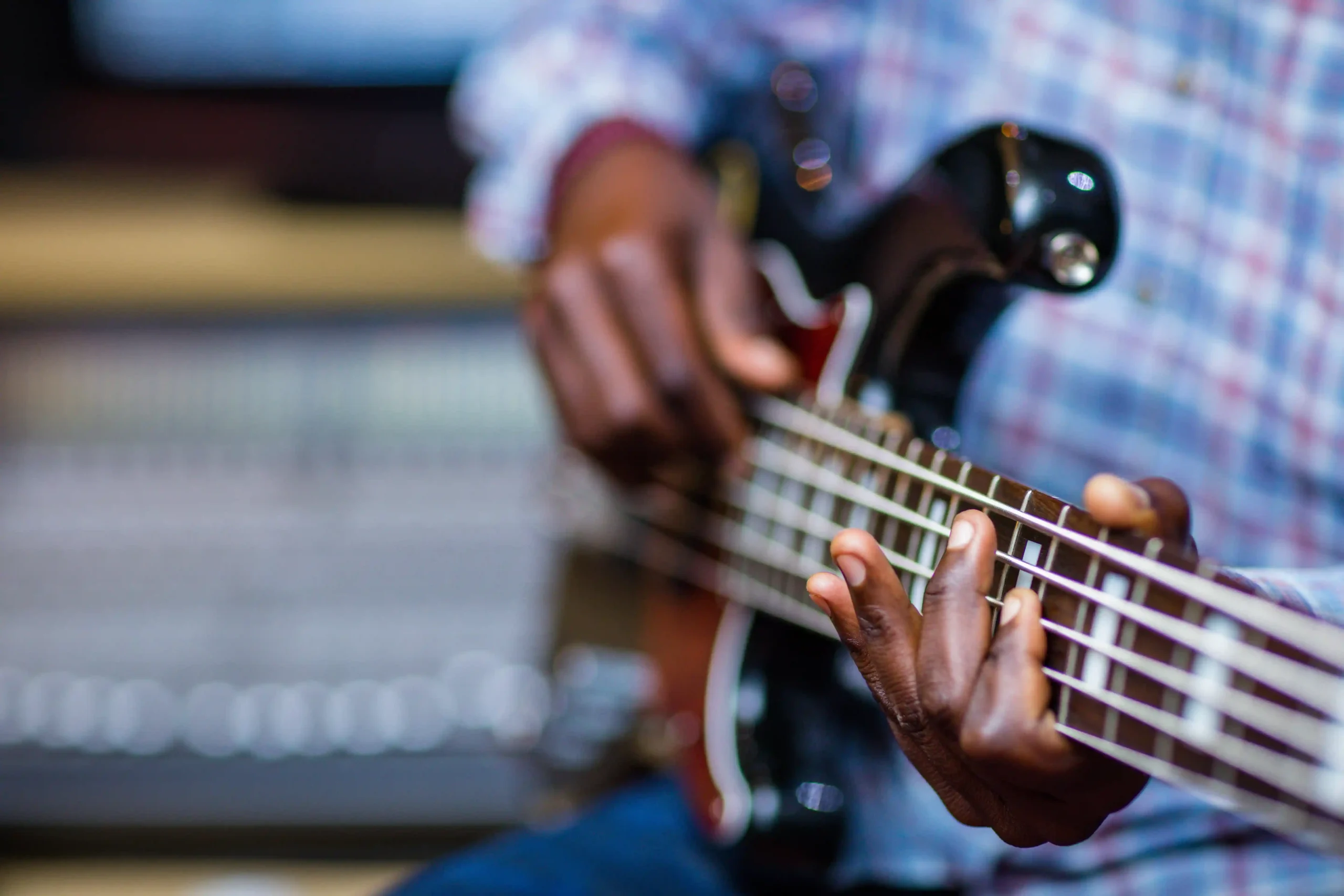
A beginner bass lesson could as such be expected to cover posture, hand position, plucking technique and basic rhythm based around these elements. You exercise the act of how to place the electric bass in your hands, fingers pressing down with clarity on the strings and creating a note without tension. These fundamentals will result in better bass playing in the future.
You could get to the point where you can read a few simple charts, count some beats and follow chord changes. Simple bass guitar patterns give you an understanding of where the root notes fit and how they make up the song. Often, a simple groove played in time is more musical than a difficult part played out of time.
Beginner lessons may cover:
- Tuning and basic instrument care
- Fingerstyle plucking
- Fretting hand control
- Simple bass line patterns
- Counting in time
- Playing with a metronome
- Listening to drums and rhythm guitar
Don’t push for complicated bass techniques too soon around this goal. First comes a good rhythm, the smooth motion of the hand, and a clean tone. Once these feel natural, learning the bass becomes easier and more enjoyable.
Building Groove and Timing
Groove is the feeling that makes a bass part sit well inside the song. It depends on timing, note length, touch, and
Groove is how a bassist finds their part within a song. It is unfortunately dependent on timing, note length, touch, and how much attention you pay to the drums. Bass teachers sometimes prepare their students to feel the pulse rather than just mechanically count.
Thus, rhythmic control is enhanced by slow (which you increase and eventually decrease) practice and repeated listening. You can clap rhythms, play short patterns, have strings muted, or use drum tracks. This will train your ear to hear where each note belongs.
Groove Music School provides real-world rhythm work in personalized lessons, so you can apply technique to actual songs. Some students need stability, and others are too stiff with their playing; they need some relief in the way that they’re playing. The personal touch assists each student in developing the type of groove that works well for their musical interests.
Good timing also gives you confidence to perform in groups. You stop worrying about each note and start hearing the whole ensemble. Anyone interested in playing with a band or in worship, school, studio, or casual settings needs to make that shift.
Exploring Bass Techniques
Once you have a solid foundation, bass techniques can enhance the depth and expressiveness of your playing. You will probably have things like slides, hammer-ons, pull-offs and palm muting goes hand-in-hand with the ghost notes and slap bass as well. Every technique should support the music, not just a gimmick put in as much as possible.
In funk, pop, and certain modern arrangements, slap bass can sound great. If not, it needs to be timed and controlled so that it doesn’t sound muddled. Students tend to progress faster with it when learnt after they have developed clean fingerstyle playing. It is also important to mention that shifting your plucking hand towards the bridge/neck makes a big difference in sound. It fills in the blank about bass, so you are not just learning songs.
Lessons for Different Skill Levels
Singapore bass guitar lessons ought to enable students at various levels, including novices who need only rudiments in backing grooves, intermediates who might appreciate a more grounded rock groove and advanced individuals who customarily do melodic nuances. Teaching lessons from beginner to advanced should not come across as the same plan repeated, end over end.
Different skill levels may focus on:
- Beginner: posture, tuning, rhythm, and simple songs
- Lower intermediate: scales, groove patterns and cleaner transitions
- Intermediate: slap bass, fills, tone control and song analysis
- Advanced: improvisation, stylistic detail and band readiness
The experienced mentors may adapt according to your learning speed. Some students do better with prepared course materials, while others may prefer songs that they already enjoy. Some of the best lessons occur when technical work and musical interests overlap.
Personalise the learning experience by selecting songs that will ensure you remain inspired. Pop and rock are great initial go-to genres, as the basslines are distinct and beneficial. Praise and worship bass lessons may focus more on dynamic control, steady repetition, and supporting a live band setting.
Choosing the Right Bass Instructors
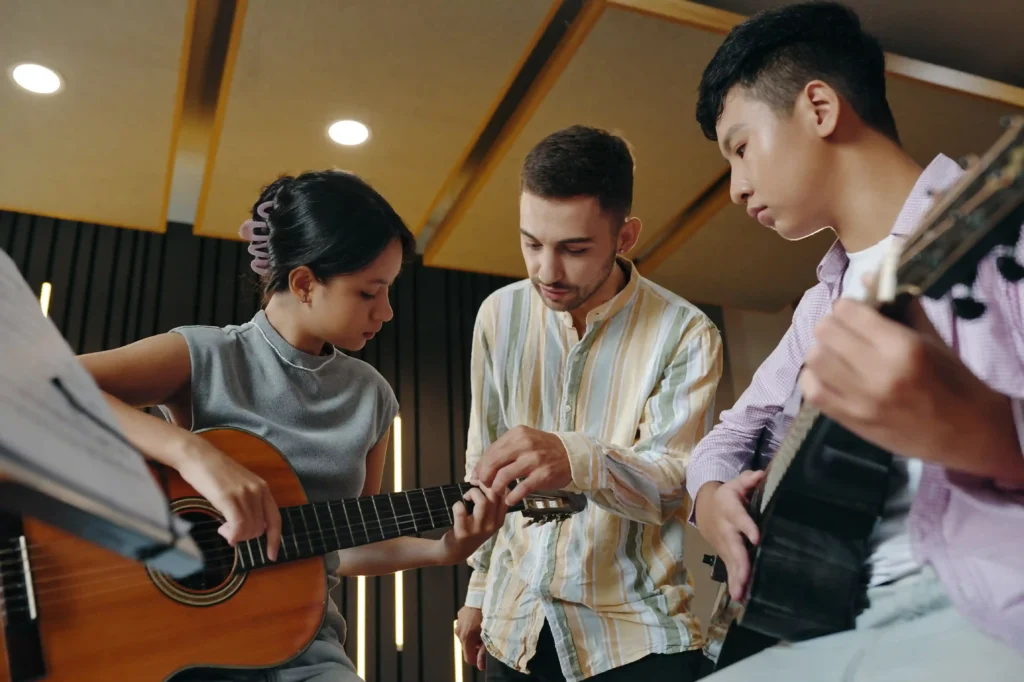
Good bass instructors explain rhythm in a way your body can understand. They should help you hear mistakes without making you feel embarrassed. Clear feedback, patience, and practical demonstrations are important parts of music education.
Instructors offering personalised bass classes can help students avoid common habits that slow progress. These could be over-gripping, not holding the notes long enough, or skipping some of them altogether. If a teacher sees these problems early, they can make minor adjustments to prevent the situation from becoming difficult to remedy.
Other factors that may influence you include course fees, schedule, trial lesson options, and the location of the tuition centre in Singapore. You also get a free trial or trial lesson where you can see what the teaching will be like before committing to a full programme. A good music school will provide support, not stress.
Bass Lessons for Confidence
Your confidence grows when you know what to appeal to and hear your progress. You once found it incredible to play two notes in a row of a simple bass line and will eventually hold an entire song with a steady rhythm. And that feeling can reframe your view of yourself as a musician.
Bass guitar classes also teach patience. Some improvements happen quietly through repeated practice, especially with timing and groove. The results may appear when you play along with a song and suddenly feel locked in.
A more supportive role on the bass can allow students to learn a bunch of other instruments better. You begin to pay attention to how the drums create a rhythm and how guitar chords will steer you in terms of which notes to play. This wider listening makes your overall musical journey richer.
Frequently Asked Questions About Bass Lessons
Do I need my own bass guitar?
It helps you practice regularly if you own one, making taking a bass class with us even better. Before buying any, you can inquire about the arrangements for your lessons. While beginners might first be learning the different types, bass size, and realistic outcomes. A teacher can also show you some basics for setup and comfort.
Is bass easier than guitar?
Bass can be simpler at the beginning because many songs use single-note lines. That does not mean it is easy to play well. Strong timing, clean tone, and steady groove take proper training.
Can adults take bass lessons?
You are never too old to learn bass. That role in a band, along with the need for timing, makes it rewarding once adult students learn timing. There is nothing lost in having a lesson that can be paced around work, family, and practice time.
What styles can I learn?
You can learn pop and rock, praise and worship, funk, basic jazz ideas, and other styles based on your musical interests. The focus may shift depending on your goals. Some students want band skills, and others want personal enjoyment.
Start Your Bass Musical Journey
Bass lessons teach you to groove and time yourself consistently and in a fun way. You learn to listen and support the music, and play more rhythmically. That lesson is solid enough to help you get better, but not so much that it robs its fun.
Get the bass guitar lessons Singapore students can approach at their own level with Groove Music School. Start with basic bass guitar knowledge, develop stronger bass techniques, and be ready to play with others.