
Choosing between a group class and a private slot is a common crossroads for new guitar students. Both teach guitar, but they are built around different ways of learning.
The short answer: group guitar lessons suit beginners who want structure, a lower cost per lesson, and the motivation of learning alongside other people working toward the same thing. Private lessons suit anyone who wants every minute of a session spent on their own specific playing, their own pace, their own sticking points. Neither format is better in general. They are built around different trade-offs.
At Groove Music School in Singapore, group guitar classes run as a structured 12-week programme, a genuinely different course from booking one-to-one guitar lessons, not simply a cheaper version of the same thing.
What Makes Group Guitar Lessons Different From Private Lessons?
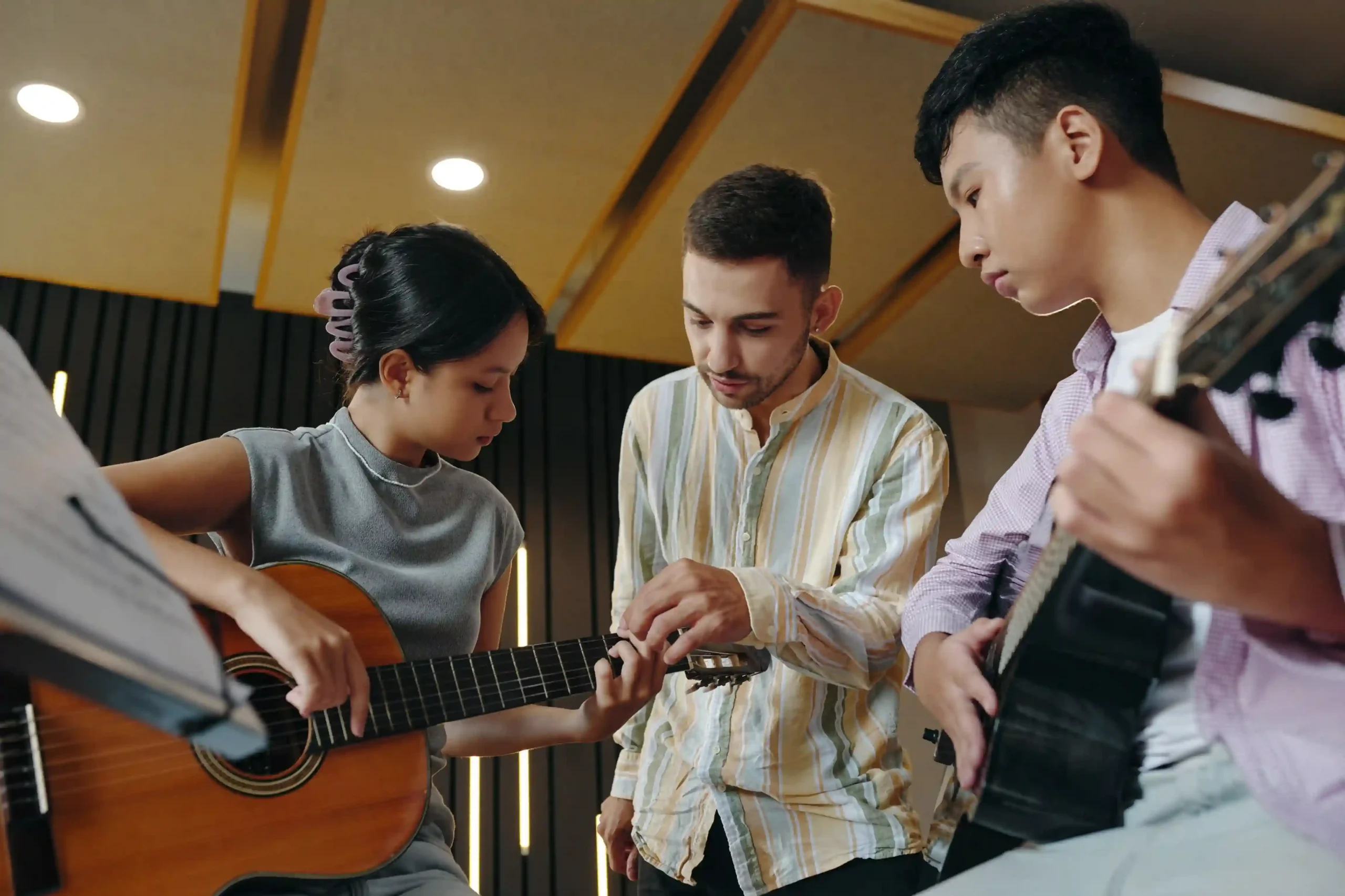
The format is the real difference, not just the price tag. A group class runs across 12 weeks with the same small set of classmates each session, building from foundational technique toward jamming and playing a more complex song together by the end. Private lessons are booked as a set of four sessions built entirely around one student’s current playing and goals.
Learning alongside other people tends to build motivation and confidence. For guitar specifically, that peer element shows up in a concrete way: playing in time with others is a skill that is much easier to practise in a group than in a one-to-one lesson.
Group guitar classes here are built around a clear 12-week progression, starting with posture, tuning, and basic chord shapes, moving into minor chords and basic fingerpicking, and finishing with jamming, improvisation and a more complex song.
Who Do Group Guitar Lessons in Singapore Actually Suit?
Group classes tend to suit complete beginners who would rather not be the sole focus of an instructor for a full hour, and people who stick with things better when a small group is expecting them to show up. They also suit anyone genuinely curious about playing with other musicians, since playing alongside other students is something a private lesson does not offer in the same way.
If your main goal is fixing one specific habit fast, like a chord change that never feels clean or timing that drifts under pressure, individual guitar lessons are built to spend every minute on exactly that, rather than sharing the session with classmates working on their own things.
What Do You Give Up by Choosing a Group Class?
A group class involves trade-offs. The programme follows one shared progression, so the foundational weeks move at the same pace for everyone, even if you already know some basic chords.
Individual attention is also shared. A private lesson spends its entire length on one player’s hands, while in a group class the instructor’s time is divided across the class. For a narrow, specific technical problem, one-to-one coaching will usually resolve it faster.
None of this makes a group class the wrong choice. It simply means the trade is real, and it comes down to which one you value more: company and cost, or full one-to-one attention.
How Much Do Group Guitar Lessons Cost Compared to Private Lessons?
Here’s how the two formats compare side by side.
| Group Guitar Classes | Private Guitar Lessons | |
| Format | 12-week structured programme | 4 lessons, booked individually |
| Group size | Small class, learning together | One to one |
| Price | $250/pax | $260 to $360 for four lessons |
| Pacing | Shared, fixed weekly progression | Personalised to one student |
Per lesson, group guitar classes cost noticeably less than private lessons. That gap is the actual trade most people are weighing: a lower cost per session and the experience of playing with others, against the full, undivided attention a private lesson gives one player.
Ready to Choose Your Format?
A common hesitation is worrying about holding a class back, especially for anyone who has never played before. That is a fair worry, and it is exactly why a trial lesson exists, to see how the pace actually feels before committing to 12 weeks of it. Our teaching team works with complete beginners regularly in both formats, and the first weeks of the group programme are built around the basics.
For a broader look at how guitar lessons fit alongside other instrument options, our guide on choosing the right music lesson for your goals covers the decision from a wider angle.
If you are still unsure which format suits you, Groove Music School offers trial lessons for both group and private guitar lessons, so you can feel the difference yourself rather than guess from a description.
Book a trial lesson and find out which format actually fits how you want to learn.
Frequently Asked Questions
Can a complete beginner join a group guitar class, or is private better to start?
Complete beginners are welcome in group classes, and the first few weeks are built around people with zero experience. If stage fright around playing in front of others is the bigger concern, starting privately first is a reasonable order too.
Do I need my own guitar before joining a group class?
Having your own guitar is recommended, because regular practice between sessions matters in a fixed weekly programme. If you do not have one yet, check with the school before your first class.
Is a group class more affordable because the teaching is lower quality?
No. The price difference comes from one instructor teaching several students in the same session rather than one, not from a difference in who is teaching.
Can I move from a group class into private lessons later?
Yes. The 12-week group programme builds a foundation, and you can then move into private lessons once you know which technique you want to focus on next.