Articles

  1. Home
  2. |
  3. Articles
  4. |
  5. All About Drums
  6. |
  7. Electronic Drums vs. Acoustic...

Electronic Drums vs. Acoustic Drums: Which is Right for You?

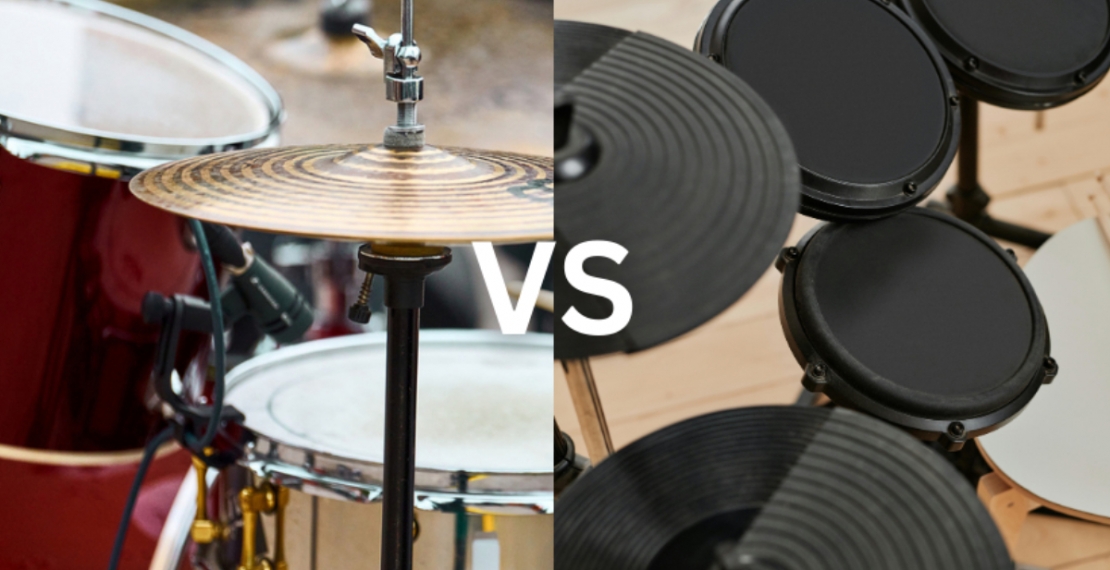
Choosing between electronic drums and acoustic drums is a common dilemma for both beginner and experienced drummers. Each type of drum set offers unique advantages and disadvantages, making the decision largely dependent on your personal preferences, lifestyle, and musical goals. In this article, we’ll explore the key differences between electronic and acoustic drums to help you determine which is the right choice for you.

Sound and Playability

One of the most significant differences between electronic and acoustic drums is the sound and playability. Acoustic drums produce sound naturally through the vibration of drumheads and cymbals, resulting in a rich, organic sound that many drummers prefer. The tactile feedback and dynamic range of acoustic drums make them ideal for expressive playing and live performances.

In contrast, electronic drums produce sound digitally through a drum module, which triggers pre-recorded samples or synthesised sounds. While modern electronic drum kits offer high-quality samples and realistic playability, they still lack the natural feel and resonance of acoustic drums. However, electronic drums allow for greater sound versatility, enabling you to switch between different drum kits and effects with the push of a button.

If you’re interested in learning to play both types of drums, consider enrolling in drum lessons in Singapore. Experienced instructors can help you master both electronic and acoustic drums, ensuring you’re well-rounded in your drumming skills.

Volume and Practice

Volume control is another crucial factor to consider when choosing between electronic and acoustic drums. Acoustic drums are inherently loud, making them challenging to practice in environments where noise is a concern. If you live in an apartment or need to practice without disturbing others, acoustic drums may not be the best option unless you invest in soundproofing or practice pads.

On the other hand, electronic drums offer a significant advantage in terms of volume control. With electronic drums, you can practice quietly by using headphones, making them ideal for drummers who need to keep the noise down. Additionally, electronic drums often come with built-in metronomes, recording capabilities, and practice tools that can aid in your drumming development.

Portability and Setup

When it comes to portability and setup, electronic drums have a clear advantage. Electronic drum kits are generally lighter and more compact than acoustic kits, making them easier to transport and set up. This is especially beneficial for drummers who need to move their kit frequently or have limited space for storage.

Acoustic drums, on the other hand, are bulkier and require more space for setup. The process of setting up and tuning acoustic drums can also be time-consuming, especially for beginners who are still learning the ropes. However, once set up, acoustic drums offer a more authentic drumming experience, with each drum and cymbal contributing to the overall sound.

Whether you choose electronic or acoustic drums, drum lessons for adults in Singapore can help you get comfortable with your chosen drum set and improve your setup and tuning skills.

Cost and Upgradability

Cost is another important consideration when choosing between electronic and acoustic drums. Entry-level acoustic drum sets are generally more affordable than electronic sets, with many quality options available under $800. However, as you progress in your drumming journey, you may find yourself wanting to upgrade individual components, such as cymbals, drumheads, or hardware.

Electronic drums, while often more expensive initially, offer more upgradability in terms of sounds and features. Many electronic drum modules allow you to download and customise new drum kits, giving you endless possibilities for sound experimentation. Additionally, electronic drums are less prone to wear and tear, reducing the need for frequent maintenance and replacement parts.

Conclusion

Deciding between electronic drums and acoustic drums ultimately comes down to your personal preferences, lifestyle, and musical goals. Acoustic drums offer a rich, natural sound and are ideal for live performances, while electronic drums provide versatility, volume control, and convenience for quiet practice.

To make the most informed decision, consider taking drum lessons at Groove Music School, where you can try out both types of drums and receive expert advice from our experienced instructors. If you’re interested in beginner drum lessons, Groove Music School can help you choose the right drum set and guide you on your drumming journey. Contact us today to learn more about our classes and how we can help you achieve your drumming goals!

Related Articles

Shopping cart

Aedan

Vocal Instructor

Backed by years of stage and media experience, Aedan teaches with the conviction that every student can develop both skill and confidence in their voice. He is committed to building solid technique while drawing out each student’s individuality, ensuring they sing with control and build the confidence to shine in any setting.

Aedan focuses on building strong vocal foundations through engaging, tailored lessons that help students improve their technique with confidence.

An accomplished performer, he has earned top placements in major competitions, including Ultimate Singer @ Apollo 2025, 新空下 2019, and the SPARK Competition. His group performances have also won 1st place at 新空下 2019 and Limbang Youth Got Talent 2025. He has also performed on YES 933’s TGIF Music Station and at the 明天 37 重逢新谣 concert.


Michelle

Vocal Instructor


With over a decade of choral experience and leadership roles as both section leader and student conductor, Michelle has spent years honing her ear for vocal technique and helping others improve their singing. While her roots are in choir, her passion extends to pop, R&B, and musical theatre, where she continues to expand her own artistry through formal vocal training.

As a teacher, Michelle goes beyond technique, she helps students build confidence, strengthen their vocal expression, and develop singing as a skill they can carry for life. Whether you’re a student outside of the CCA system or an adult picking up singing later on, Michelle creates a space where you can grow steadily and enjoy the process of becoming a better singer.


Erin

Piano/Guitar Instructor

Erin is a skilled pianist and guitarist with an ABRSM classical piano background and extensive performance experience. She has successfully guided many beginners to play songs confidently while building strong foundational skills in note reading, rhythm, and musicality.

Inspired by artists such as Tom Misch, John Mayer, and Ed Sheeran, she excels in finger-plucking techniques and brings contemporary styles such as Pop, R&B, Neo-Soul, and Folk into her lessons. Erin has performed at major community events including West Coast Rocks 2024 & 2025 and even led her own self-organised concert at Gardens by the Bay. She also creates and shares her own music covers combining piano, guitar, and vocals, bringing creativity and a modern approach to every lesson. Her teaching style ensures students develop technical skills, confidence and a love for music.

McQuin

Vocal Instructor

Mcquin is a contemporary and neo-soul vocalist, and a member of the award-winning a cappella group The Island Voices. Through years of performing on both local and international stages, she has developed a teaching style that blends technical foundation with artistic storytelling.

Specialising in tone development, modern vocal technique, and stage presence, Mcquin helps singers move beyond simply “singing correctly” to perform with true connection and intent. Her lessons offer a nurturing, collaborative space where technique meets creativity, tailored entirely to each student’s unique voice and goals.

Ban

Drums Instructor

With 17 years of drumming experience, Ban has built a strong foundation in samba, samba reggae, and funk, while expanding into Pop, Rock, and R&B. With a Diploma in Music Production & Audio Engineering, he brings a rare advantage of seeing music from both a performer’s and producer’s perspective – understanding how rhythm, sound, and energy come together to create impact.

Ban demonstrates advanced technical skill and a commitment to continuous growth. He has performed with various local bands across genres, gaining real-world insight into live performance and studio work. In lessons, he goes beyond teaching beats; he helps students groove with precision, adapt across styles, and develop confidence as a drummer. His combination of versatility, stage experience, and production knowledge makes his teaching practical and effective.

Elsa

Vocal Instructor

Elsa is an accomplished vocal coach, music producer, and artist with over 10 years of experience in the music industry. She holds a Bachelor’s Degree in Music with Honours from Goldsmiths University and is certified in Grade 5 classical piano (theory and practical). 

Specialising in pop and contemporary vocal styling, Elsa helps singers develop strong vocal technique, vocal styling, harmony and performance confidence. Her lessons are personalised to each student’s voice and goals.

With over five years of experience mentoring aspiring musicians, Elsa brings both industry insight and real artistry to her teaching. As a solo artist and member of the award-winning a cappella group The Island Voices, she continues to write, produce, and perform — giving students a coach who truly lives what she teaches.

Philip Loon

Guitar Instructor

Philip is a seasoned veteran with decades of rock-solid experience under his belt. His specialty lies in Classic Rock, drawing inspiration from iconic bands like Deep Purple, Guns N’ Roses, Bon Jovi, Santana, Scorpions, and AC/DC etc. To date, he has successfully taught more than 200 students, many of whom have attained up to grade 8 certification in guitar, Rock & Pop by Trinity College London. Philip is your go-to guy for anyone looking to perfect their guitar tones and indulge in lively discussions on all things guitar-related.